
The Divine Recipe: An Easter Reflection
In 1886, John Pemberton was trying to create a medicinal syrup to treat headaches. He messed up the proportions, mixed it with carbonated water, and—quite by accident—created Coca-Cola. What started as a pharmaceutical mistake became a global icon.
History is full of these “happy accidents.” Penicillin was a moldy mistake; Post-it notes were the result of a failed super-glue. It’s easy to look at our own lives through that same lens—to feel like we are the result of a series of random events, biological coincidences, or even “errors” in judgment.
But Easter Sunday tells a radically different story.
We Are Not an Accident
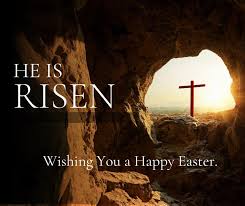
Today’s Gospel (John 20:1-9) begins in the dark. Mary Magdalene arrives at the tomb while it is still night, sees the stone moved, and immediately jumps to a logical—but wrong—conclusion: “They have taken the Lord from the tomb, and we don’t know where they put him.”
From her perspective, the story of Jesus had ended in a horrific mistake. The crucifixion looked like a failure, and the empty tomb looked like a final insult—a body heist. But Mary was looking at a masterpiece through a keyhole. She saw a “mistake,” but God was revealing His long, awesome plan.
- The Human Perspective: We see the “darkness,” the “empty spaces,” and the things that go wrong.
- The Easter Perspective: These are not errors; they are the moments where God’s plan breaks through the surface.
The Evidence of Intention
When Peter and the “other disciple” run to the tomb, they don’t find chaos. They find order. The Gospel specifically mentions the linen cloths lying there and the napkin that had covered Jesus’ head, “rolled up in a separate place.” This wasn’t a panicked mistake or a grave robbery. Grave robbers don’t take the time to fold the laundry. That small detail is a signal: Everything is exactly as it was meant to be. For thousands of years, God had been layering this “recipe” for our salvation:
- The promises to Abraham.
- The liberation of the Exodus.
- The whispers of the prophets.
It was a plan so precise that even death couldn’t derail it. In fact, death was the final ingredient.
Living as the “Intended”
If Coca-Cola—a literal mistake—can change the world, imagine what you can do as a deliberate creation of the Almighty. The Resurrection is God’s way of saying that you are not a byproduct of a broken world. You are not a “fix-it” project. You are the intended recipient of a love that spans eternity. Just as the “other disciple” saw the empty tomb and believed, we are called to look at the “empty” parts of our own lives and believe that God is working His plan there, too.
Carrying the Light
As you leave the church today, stop looking at your life as a series of accidents. You were willed into existence by a God who does not make mistakes.
Christ is Risen! He is Risen indeed. And because the tomb is empty, we know that no “mistake” in our past is too big for God’s “Plan” for our future.
Amen.


